What Is an Embedded System

 EmTantra Technologies
·
·6 min read
·43 views
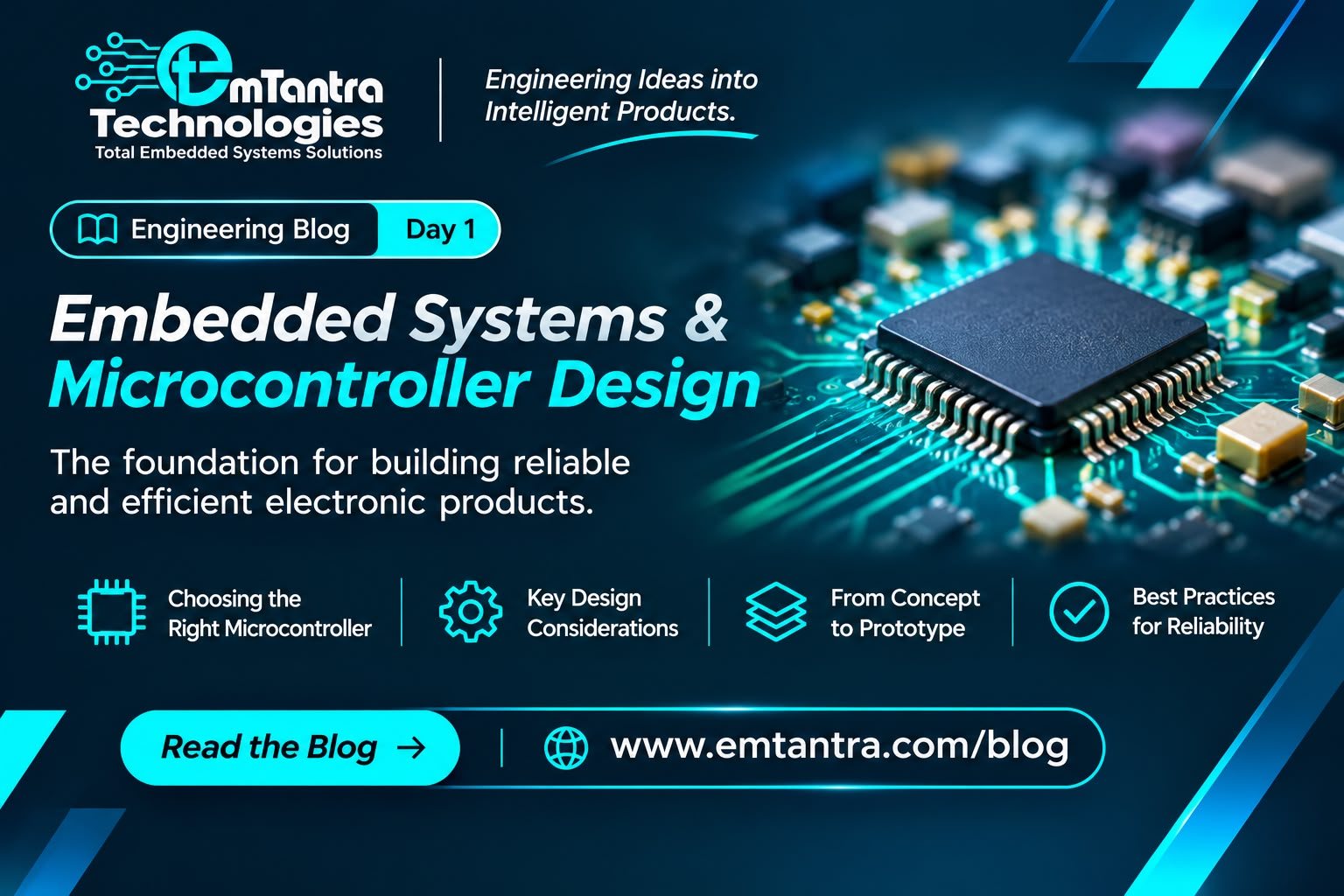
What Is an Embedded System ?
The Technology Behind Everyday Intelligent Products
Many of the electronic products we use every day contain a small computer designed to perform a specific task. These systems control appliances, measure electrical parameters, manage machines, monitor sensors, and connect physical devices to digital platforms.
These are embedded systems.
Embedded systems are the foundation of modern electronics and automation. From a smart home switch to an industrial controller, they combine hardware and firmware to perform dedicated functions reliably.
At EmTantra Technologies, embedded systems are at the core of our product engineering work. Understanding how they are designed is an important first step toward building reliable electronic products.
WHAT IS AN EMBEDDED SYSTEM?
An embedded system is a computing system integrated into a larger product or machine to perform a specific function.
Unlike a general-purpose computer, which can run many different applications, an embedded system is usually designed around a defined set of requirements.
Examples include:
- A water level controller that monitors tank levels and operates a pump
- A smart switch that controls electrical loads
- An industrial controller that reads sensors and manages a process
- A digital panel meter that measures and displays electrical parameters
- An IoT device that sends sensor data to a cloud platform
An embedded system may operate independently, communicate with other devices, or connect to a larger automation network.
THE MAIN COMPONENTS OF AN EMBEDDED SYSTEM
A typical embedded product includes several interconnected components.
- Microcontroller or processor
The microcontroller is often the central control element. It executes firmware, reads inputs, processes information, and controls outputs.
Common microcontroller families include STM32, ESP32, Renesas RL78, and 8051-based devices. The right choice depends on the product’s performance, peripherals, memory, power, cost, and connectivity requirements.
- Input interfaces
Inputs allow the system to receive information from the outside world.
They may include digital signals, analog sensors, buttons, switches, communication interfaces, or measurement circuits.
For example, a water level controller may receive signals from level sensors, while an industrial monitoring device may measure temperature, pressure, or electrical parameters.
- Output interfaces
Outputs allow the system to control or communicate with external devices.
Examples include LEDs, displays, relays, motor control signals, buzzers, and communication transmitters.
Output circuits must be designed to match the electrical requirements of the connected load. A microcontroller pin should not directly drive a load that exceeds its ratings.
- Power supply
The power supply provides the required voltage and current to the embedded system.
Depending on the application, the product may operate from a battery, USB supply, DC adapter, or an industrial power source.
Power design must consider voltage regulation, efficiency, transient behavior, protection, thermal performance, and noise.
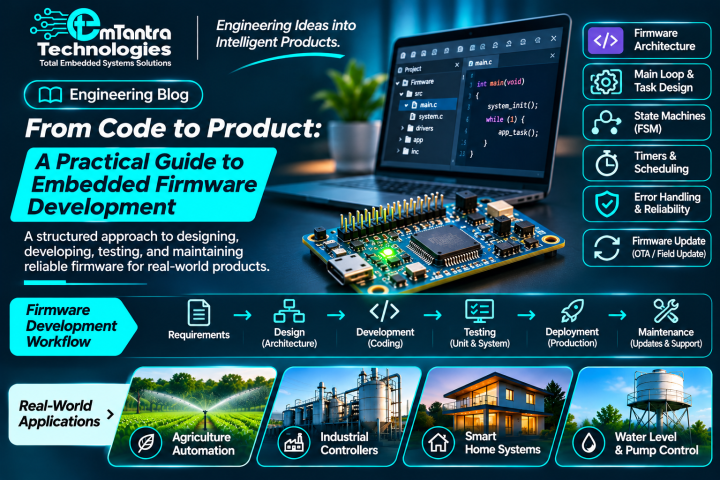
- Firmware
Firmware is the software that runs on the embedded device.
It defines how the system reads inputs, processes data, controls outputs, communicates, and responds to faults.
Firmware and hardware must be developed together. A well-written program cannot compensate for an unsuitable circuit or incorrect electrical interface.
HOW DOES A MICROCONTROLLER WORK?
A microcontroller executes instructions stored in its program memory.
A simplified control sequence may look like this:
- Initialize the system and peripherals
- Read sensor or input data
- Process the data according to the application logic
- Update outputs or control connected devices
- Communicate status or measurements
- Repeat the process
Some systems use a simple main loop. Others use interrupts, timers, state machines, an RTOS, or a combination of these techniques.
The software architecture should be selected based on timing requirements, system complexity, resource limits, and reliability expectations.
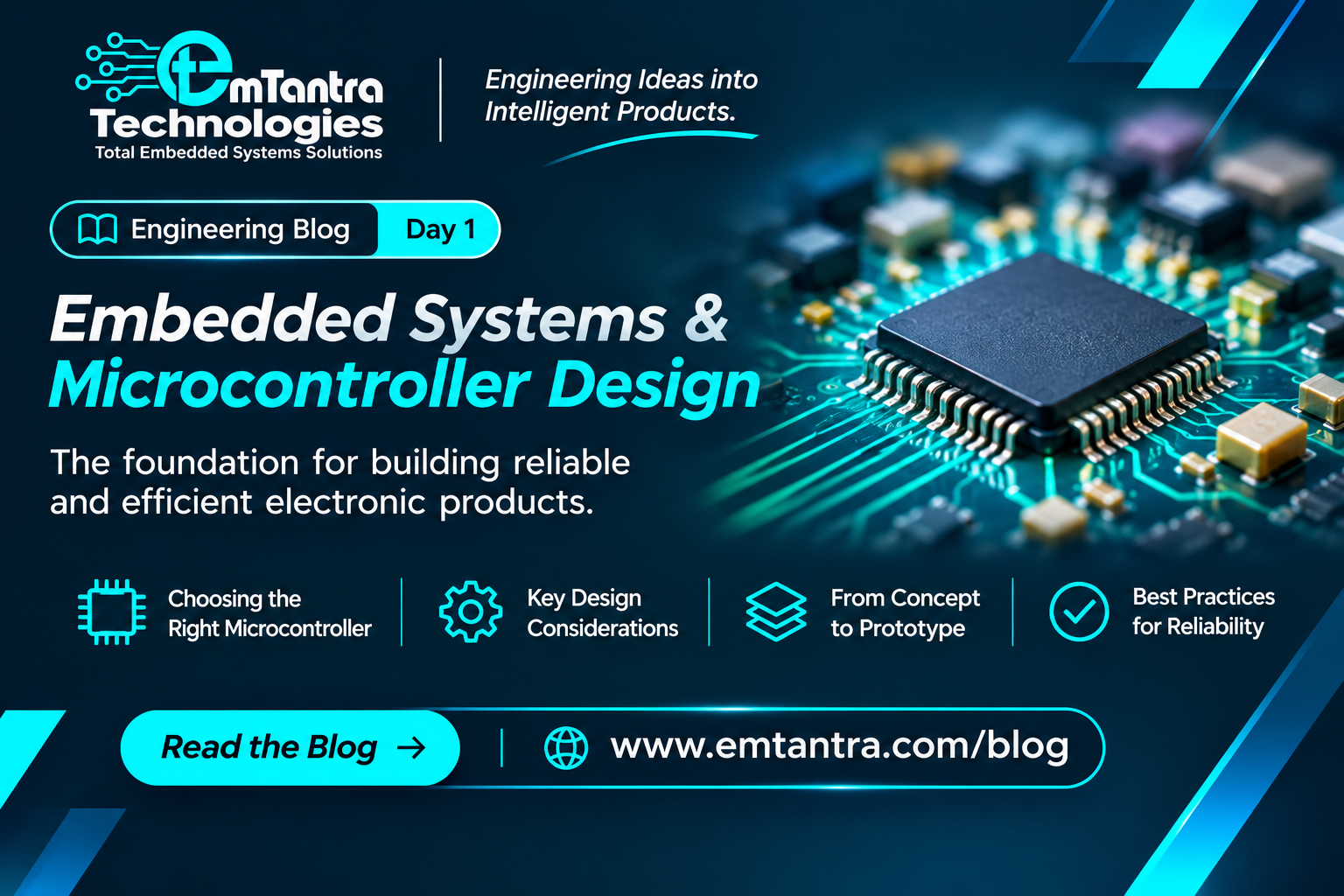
CHOOSING THE RIGHT MICROCONTROLLER
Selecting a microcontroller is an important engineering decision. The most powerful device is not always the best choice.
Key considerations include:
Processing performance: Can it execute the required control and communication tasks within the available time?
Memory: Is there enough Flash and RAM for the firmware, data buffers, and future features?
Peripherals: Does it provide the required ADC channels, timers, PWM outputs, UART, SPI, I²C, CAN, USB, or other interfaces?
Power consumption: Is the device suitable for the product’s power budget, especially in battery-powered applications?
Operating environment: Can it meet the required temperature, electrical, and reliability conditions?
Cost and availability: Is the device practical for the expected production volume and product lifecycle?
Development ecosystem: Are suitable tools, libraries, debugging interfaces, and technical resources available?
A clear requirement list helps narrow down the options before schematic design begins.
DESIGNING FOR RELIABILITY
An embedded product must work not only under ideal conditions but also when real-world disturbances occur.
Important design considerations include:
Electrical protection: Protect inputs and interfaces against expected electrical disturbances.
Power stability: Ensure the supply remains within the required operating limits during startup and load changes.
Noise management: Consider grounding, PCB layout, filtering, and separation of sensitive circuits from noisy sections.
Fault handling: Define how the system responds to sensor failures, communication loss, invalid data, and unexpected operating conditions.
Watchdog and recovery: Where appropriate, use watchdog mechanisms and recovery strategies to help the system return to a known state.
Testing: Verify the product under realistic operating conditions rather than relying only on basic bench testing.
These practices help turn a working prototype into a dependable product.
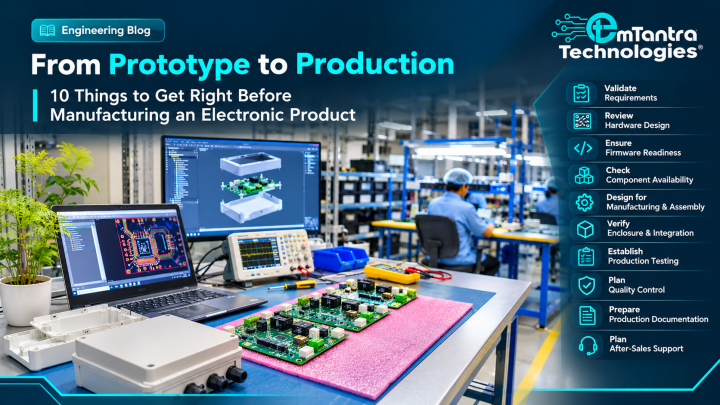
FROM MICROCONTROLLER TO COMPLETE PRODUCT
A microcontroller alone does not make a complete embedded product.
Product development also involves circuit design, PCB layout, firmware, enclosure integration, communication, testing, and preparation for manufacturing.
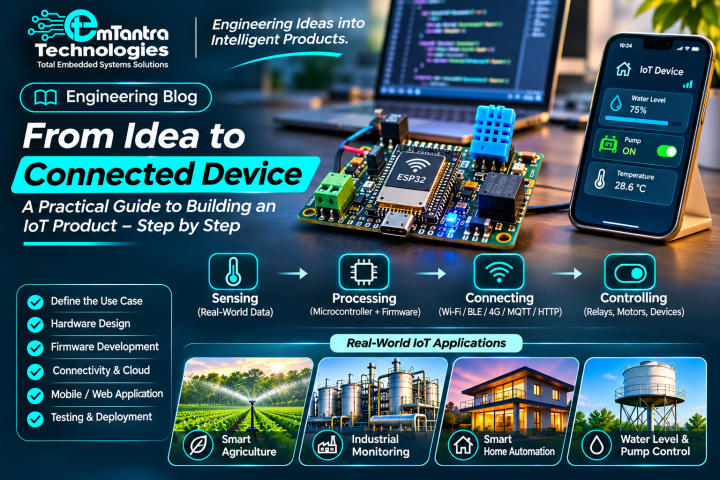
For example, an IoT pump controller may combine voltage and current measurement, pump control, protection logic, local status indication, and remote connectivity.
Each function must be designed and tested as part of the complete system.
CONCLUSION
Embedded systems make modern electronic products intelligent by combining dedicated computing, electronic hardware, and firmware.
Choosing the right microcontroller is only one part of the process. Successful development requires clear requirements, suitable hardware, reliable firmware, careful integration, and systematic testing.
At EmTantra Technologies, we develop embedded electronics and customized product engineering solutions for applications across IoT, agriculture automation, industrial monitoring, smart home systems, and connected devices.
Have an embedded product idea?
Explore our engineering capabilities at emtantra.com.
EmTantra Technologies
Total Embedded Systems Solutions
Engineering Ideas into Intelligent Products.